Roberts’s Miscarriage of Reasoning
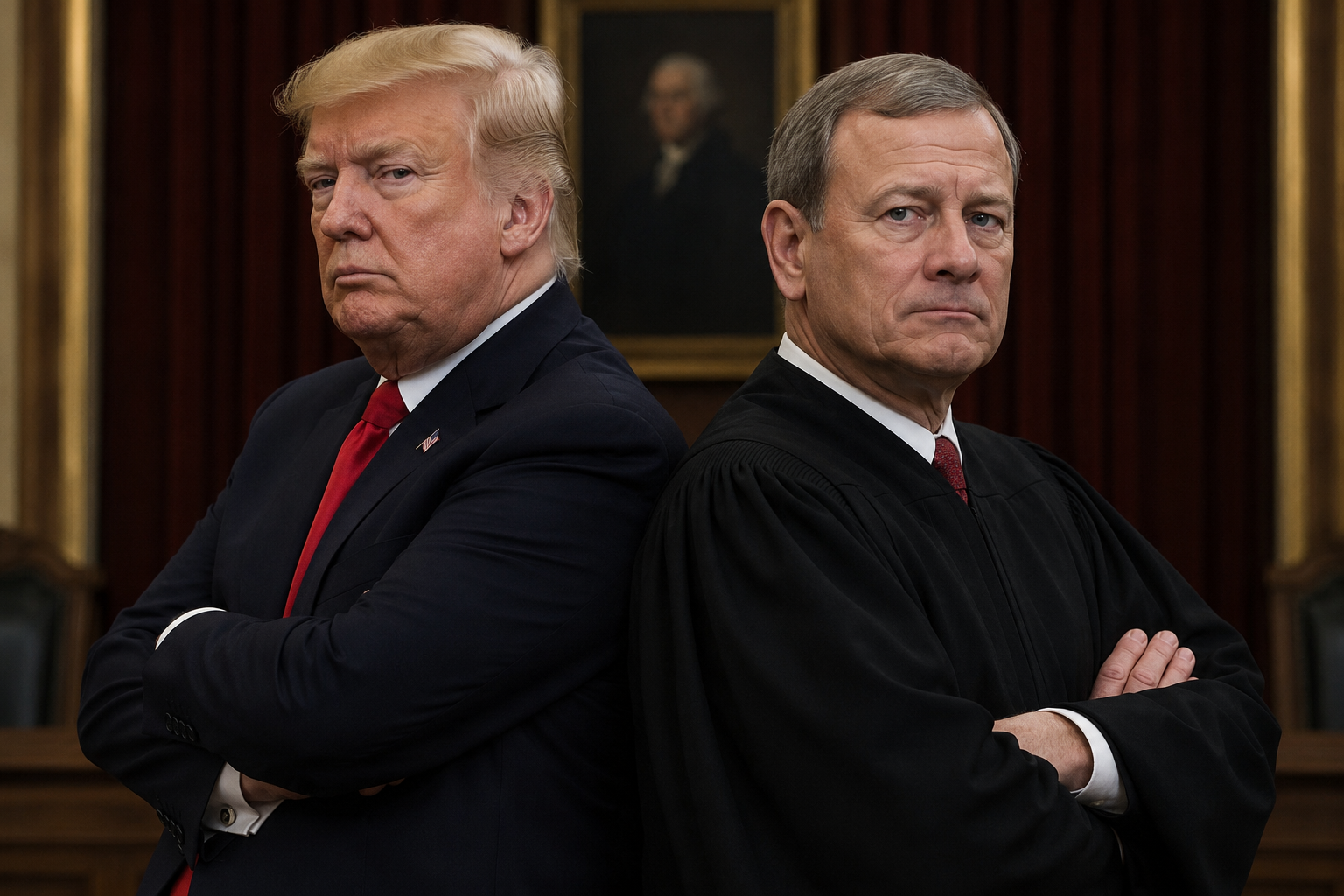
On June 30, 2026, the Supreme Court of the United States handed down its ruling in Trump v. Barbara, striking down President Trump’s executive order that sought to limit birthright citizenship to children of at least one parent who is a legal citizen or permanent resident. The decision was 6-3, with Chief Justice John Roberts writing the majority opinion joined by Justices Sotomayor, Kagan, Barrett, and Jackson. Justice Kavanaugh concurred in the result but dissented from the constitutional holding. Justices Thomas, Alito, and Gorsuch dissented.
The ruling is, to borrow Mark Levin’s assessment, “a legal abomination.” And that characterization is not hyperbole. It is a sober, textualist reading of what Roberts actually wrote, measured against what the Fourteenth Amendment actually says.
Here is the text of the Citizenship Clause: “All persons born or naturalized in the United States, and subject to the jurisdiction thereof, are citizens of the United States and of the State wherein they reside.”
Notice the conjunction: “and.” Not “or.” Two conditions must be met for birthright citizenship to attach. A person must be born in the United States, and that person must be subject to the jurisdiction thereof. Roberts collapsed this into a single condition. In his majority opinion, he treated “subject to the jurisdiction thereof” as synonymous with being physically present on American soil and subject to American law. Under Roberts’s reasoning, if you can be arrested in the United States, you are “subject to the jurisdiction thereof.” If a police officer can pull you over on an American highway, you satisfy the clause.
This is not textualism.
It is not originalism.
It is a redefinition of the historical meaning; a results-oriented jurisprudence dressed in a historical costume of his own tailoring.
“Subject to the jurisdiction thereof”
If “subject to the jurisdiction thereof” merely means present on the territory and answerable to its laws, then the phrase is entirely redundant. “Born in the United States” already establishes territorial presence. Why would the framers of the Fourteenth Amendment add a second, independent qualifying clause that means exactly the same thing as the first? They wouldn’t. And they didn’t. The clause was added deliberately to exclude categories of people who, while physically present on American soil, owed their political allegiance to a foreign sovereign.
The historical Senate debates surrounding the Fourteenth Amendment make this unmistakably clear. Senator Lyman Trumbull, a principal architect of the amendment, stated that “subject to the jurisdiction thereof” meant “not owing allegiance to anybody else.” Senator Jacob Howard, who introduced the amendment on the Senate floor, explicitly said the clause would exclude “persons born in the United States who are foreigners, aliens, who belong to the families of ambassadors or foreign ministers.” These are not obscure footnotes in the historical record. They are the stated intentions of the men who wrote the clause. Roberts ignored these framers and then buried them under layers of English common law that predated the American constitutional system.
This is the core intellectual fraud of the Roberts opinion. He started with a conclusion — that birthright citizenship is universal — and worked backward to find the thinnest of historical support for it, leaning heavily on English common law concepts of jus soli that the Fourteenth Amendment’s framers were explicitly trying to move beyond. The framers were not codifying medieval English subjectship. The 14th Amendment was written in the later part of the 1800’s. They were creating a distinctly American concept of citizenship grounded in allegiance to a well-established Constitutional America, not mere geographic accident.
The Thomas Dissent Is Brilliant Clarity
Justice Clarence Thomas, in his extraordinary 91-page dissent, dismantled this reasoning with surgical precision. Thomas argued that the Citizenship Clause was designed to guarantee citizenship to freed slaves — people who had no other homeland, owed no allegiance to any foreign power, and were in every meaningful sense already Americans except in the eyes of the law after Dred Scott. Thomas provided extensive citations from the ratification-era debates demonstrating that the framers understood “subject to the jurisdiction thereof” to require domicile and complete political allegiance, not mere territorial presence.
As Thomas wrote: “Citizens were not the people who were temporarily passing through a territory or who happened to be born within it. Citizens were the permanent members of the body politic — the people whose roots were in a place, who called that place home, and who would, if necessary, go to war for that place.”
Roberts cited none of this. Mark Levin put the point with characteristic directness on Hannity, calling Roberts’s opinion “deceitful” and noting that Thomas provided extensive quotations establishing that the Citizenship Clause was never intended to apply to aliens — quotations that Roberts and the majority simply chose not to engage. As Levin summarized it: “Because they are lying to the American people.”
Justice Alito, in his separate dissent, added a devastating practical observation: the Roberts ruling “preserves a powerful incentive to enter or remain in this country illegally” and saddles the United States with what he called a “medieval rule” of citizenship that even the United Kingdom, from which it originated, has long since abandoned. When the country that invented jus soli has moved on from it, perhaps the Supreme Court of the United States should take notice.
Justice Gorsuch, writing separately, framed the core dispute with admirable clarity. Two competing visions of citizenship were at stake. One holds that the Fourteenth Amendment simply imported the English common law rule: born on the soil, you’re a citizen, full stop. The other holds that the Amendment adopted a distinctly American understanding — one that promises citizenship to children born to parents who have made this nation their permanent home, regardless of race, religion, or national origin, but not to children of transients, tourists, or trespassers. Gorsuch sided with the latter. Roberts, remarkably, chose the former and called it originalism.
The irony here is bitter. Roberts has spent his career positioning himself as an institutionalist who respects the Court’s legitimacy. But nothing damages the Court’s legitimacy more than a majority opinion that pretends a 158-year-old clause says something it demonstrably does not say, while 91 pages of contrary evidence sit in the dissent next to it. This is the Obamacare tax-penalty reasoning all over again — perhaps worse, because at least in NFIB v. Sebelius, Roberts was rewriting a statute. Here, he is rewriting the Constitution.
Congress Can Fix This — No Amendment Required
In the aftermath of Trump v. Barbara, the predictable chorus has begun. Pundits, politicians, and legal commentators across the spectrum are declaring that the “only” path forward is a constitutional amendment. Dan Bongino called for one. Ron DeSantis has signaled the same. Even some allies of the president have resigned themselves to the idea that because the Roberts majority constitutionalized birthright citizenship, Congress is now powerless to act without the impossible threshold of a two-thirds vote in both chambers and ratification by three-fourths of the states.
They are wrong.
Congress is not powerless.
And their error is not a matter of opinion — it is a matter of simply not reading and understanding Article III of the Constitution they claim to revere.
Article III, Section 2 of the Constitution grants the Supreme Court appellate jurisdiction “with such Exceptions, and under such Regulations as the Congress shall make.” This is known by every Constitutional scholar, attorney and judge as the Exceptions Clause, and it is not a theoretical curiosity from a law school seminar. It is a live, operational power that Congress has exercised before — and that the Supreme Court itself has recognized as valid.
The landmark case is Ex parte McCardle, decided in 1869. During Reconstruction, a newspaper editor named William McCardle was arrested by military authorities and filed a habeas corpus petition that reached the Supreme Court. While the case was actively being heard — oral arguments had already been delivered — Congress passed a statute stripping the Court’s jurisdiction to hear the appeal under the Constitution’s Exceptions Clause. The Court accepted the jurisdiction strip and dismissed the case. Chief Justice Salmon Chase, writing for a unanimous Court, acknowledged that the power of Congress to make exceptions to the Court’s appellate jurisdiction was constitutional and binding. The Court did not fight it. It could not fight it. The text is clear.
The Constitution gives Congress, not the Supreme Court, the final say in all matters of adjudication.
The Legislative Fix — Returning Power Back To Congress
This is not ancient history with no modern application. It is controlling precedent that establishes a simple principle: Congress controls the Supreme Court’s appellate jurisdiction, and Congress can take it away.
Here is how it works in practice. The order of operations matters enormously.
Step one: Congress passes legislation stripping the Supreme Court — and all federal courts — of jurisdiction to hear any challenge to, or render any opinion upon, the definition of citizenship under the Fourteenth Amendment’s Citizenship Clause. This bill requires a simple majority in the House, a simple majority in the Senate (the filibuster for this category of legislation is functionally dead), and the president’s signature. Once enacted, the courthouse door is closed. No plaintiff can file suit. No district judge can issue an injunction. No appellate court can hear an appeal. And the Supreme Court cannot take the case, because Congress has removed it from their jurisdiction.
Step two: Congress passes a statute defining birthright citizenship in clear, unambiguous terms. The language should be straightforward and unambiguous: citizenship at birth under the Fourteenth Amendment attaches only to persons born in the United States to at least one parent who is a citizen of the United States. Children born to two foreign nationals — whether in the country legally, illegally, or temporarily — are not citizens at birth, though they may pursue citizenship through the naturalization process established by Congress.
The sequence is critical. If Congress legislates first and strips jurisdiction second, there is a window — perhaps only days or hours, but a window nonetheless — in which a sympathetic plaintiff files suit in a friendly district court and obtains a temporary restraining order before the jurisdiction strip takes effect. We have watched this exact playbook run against the Trump administration’s executive orders for the past eighteen months. District judges in Hawaii, Massachusetts, and elsewhere have demonstrated an eagerness to issue nationwide injunctions at the first opportunity. Congress must not give them that opportunity. Strip jurisdiction first. Legislate second. In that order.
Congress’ Constitutional Responsibility
Some will object that this is an abuse of congressional power, that the Exceptions Clause was never intended to be used as a mechanism for overriding constitutional rights. This objection fails on multiple levels. First, the Exceptions Clause contains no limiting language. It does not say “with such Exceptions as the Congress shall make, provided the exceptions are reasonable and do not touch fundamental rights.” It says “with such Exceptions, and under such Regulations as the Congress shall make.” Period. The framers of Article III knew how to write limiting language. They chose not to include any here.
Second, Congress is not overriding a constitutional right. Congress is correcting a judicial misinterpretation of one. The Roberts majority invented a right that does not exist in the text, then constitutionalized it. Congress, by stripping jurisdiction and legislating the correct definition, is restoring the original public meaning of the Fourteenth Amendment — the meaning that Thomas, Alito, and Gorsuch articulated in their dissents, and that the framers of the amendment expressed in their own words on the Senate floor.
Third, there is a deeper structural principle at work. The Constitution established three coequal branches of government. Somewhere in the past century, and especially in the past fifty to years, the judiciary stopped acting like a coequal branch and started acting like a supreme one. The Court gradually asserted interpretive supremacy by default, not because the Constitution grants it, but because Congress stopped pushing back. Judicial review — the power to interpret the Constitution — became judicial supremacy — the power to be the final and unreviewable arbiter of all constitutional questions. These are not the same thing. Congress has the constitutional tools to remind the Court of the difference.
It simply needs the will to use them.
The amendment crowd means well. But their position amounts to learned helplessness. They have been trained — by law schools, by media, by decades of institutional deference — to believe that once the Supreme Court speaks, the only remedy is the supermajority process of Article V. That is not what the Constitution says. That is not what the framers intended. And that is not what the precedent supports. Congress can act. Congress should act. And if the 2026 midterms deliver the right Congress, Congress will act.
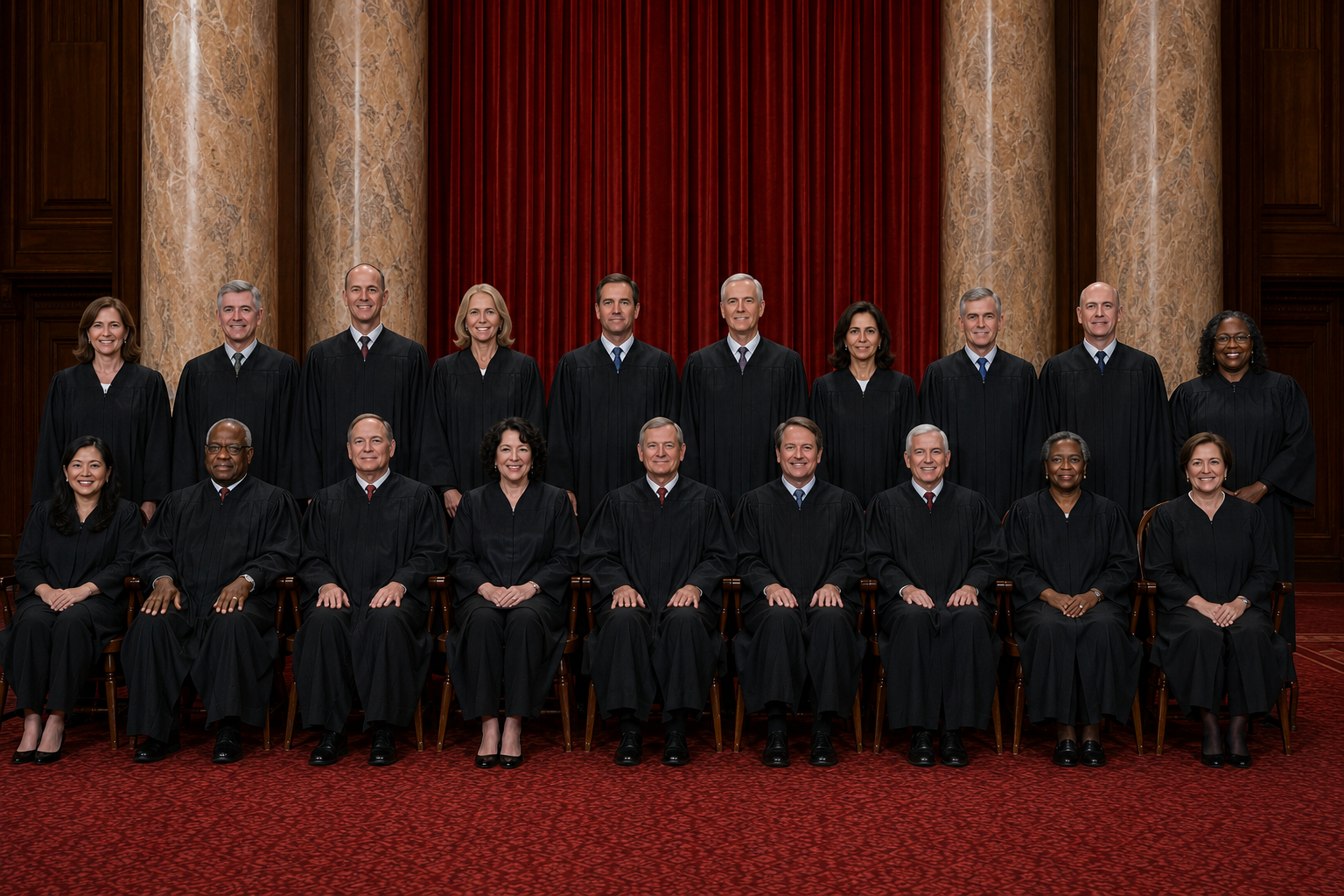
Expand the Court to Nineteen
Even if Congress strips jurisdiction and legislates on birthright citizenship, the deeper structural problem remains. The Supreme Court, as currently constituted, is a nine-member body in which a single swing vote controls the constitutional destiny of 330 million Americans. Trump v. Barbara was decided 5-4 on the constitutional question. One justice — Amy Coney Barrett, a Trump appointee no less — provided the decisive fifth vote for the Roberts majority’s constitutional holding. One person. One vote. That is not deliberation. That is a coin flip with a law degree.
The 5-4 dynamic has plagued the Court for decades. It creates kingmakers — Anthony Kennedy for a generation, then Roberts, now Barrett on selected issues. It incentivizes strategic behavior rather than honest jurisprudence. It means that every nomination becomes an existential political battle, because the difference between a 5-4 majority and a 5-4 minority is the difference between constitutional law going one direction or the opposite. This is not how a deliberative judicial body is supposed to function.
The solution is straightforward: expand the Court to smooth out the current political liberal wackiness.
There is nothing constitutionally sacred about nine. The Constitution does not specify the number of Supreme Court justices. Congress has changed the number seven times in American history, ranging from as few as five to as many as ten. The current number of nine was set by the Judiciary Act of 1869 and has remained unchanged since — not because of any constitutional mandate, but because of inertia and political convention.
A nineteen-member Court solves the structural problems that a nine-member Court creates. First, it eliminates the kingmaker dynamic. When you need ten votes for a majority instead of five, no single justice can control outcomes. A Roberts or a Barrett drifting from textualist principles on a given case becomes irrelevant when the textualist bloc holds twelve or thirteen votes. The bad jurists do not need to be removed; they are simply outvoted.
Second, a larger Court forces genuine deliberation. Building a ten-vote majority requires broader consensus. Opinions must persuade more minds, which means they must be grounded in stronger reasoning. The lazy, results-oriented jurisprudence that characterizes too many 5-4 decisions becomes harder to sustain when the margin is larger and more diverse viewpoints must be accommodated.
Third, it neutralizes the liberal bloc. With ten new seats filled by thoroughly vetted textualists, the Court’s three liberal justices — Sotomayor, Kagan, and Jackson — become ceremonial dissenters. Their votes no longer matter to outcomes. They can write whatever progressive fiction they wish in their dissents; it will have no more legal force than an op-ed in the New York Times.
The mechanics of expansion are simple. Congress passes a statute increasing the number of Supreme Court seats from nine to nineteen. The president nominates ten new justices. The Senate confirms them by simple majority vote — the filibuster for Supreme Court nominations was eliminated in 2017. If the GOP holds the presidency and a working Senate majority, the entire process — from legislation to confirmation of all ten justices — can be completed in a single congressional session.
The political objection is obvious: Republicans spent years criticizing Democrats for threatening to pack the Court. This is true. It is also irrelevant. The Democrats set the precedent by eliminating the filibuster for lower court nominations in 2013. The Republicans extended it to Supreme Court nominations in 2017. The institutional norms that were supposed to prevent court-packing are already dead. Both parties killed them. The only question now is which party will use the tools that remain.
More fundamentally, the case for expansion is not partisan — it is structural. A nine-member Court with lifetime appointments and no meaningful check on its power is a design flaw. It has produced decades of 5-4 decisions that swing the nation’s constitutional framework based on the idiosyncratic reasoning of a single justice. Whether you are a conservative frustrated by Roberts or a progressive frustrated by Alito, the underlying problem is the same: too few minds making too consequential a decision with too little deliberative accountability. Nineteen justices is not court-packing. It is court-fixing.
The 2026 Midterms: Congress Must Reassert Its Constitutional Role
None of this happens without the right Congress. The tools exist. The constitutional authority exists. The precedent exists. What has been missing, for decades, is the political will.
The 2026 midterm elections are the hinge point. If the Republican Party gains decisive majorities in both chambers — not slim, ungovernable margins, but working majorities with enough reliable textualists and structural constitutionalists to act — then January 2027 becomes a fundamentally different moment in American governance.
A Congress with the will to act can strip the Supreme Court’s jurisdiction over birthright citizenship. It can legislate the correct definition and close the courthouse door before the first lawsuit is filed. It can expand the Court to nineteen seats and fill them with justices who will read the Constitution as it was written, not as they wish it had been written. It can reassert the principle — understood by every schoolchild in the 1970s but apparently forgotten by every law professor since — that Congress is the supreme branch of the federal government, not a subordinate body waiting for permission from nine unelected lawyers some liberal President and establishment RINO Senate saddled America with decades ago.
Updating the high court is not radicalism.
This is the constitutional design functioning as intended.
The framers gave Congress the power of the purse, the power to structure the judiciary, the power to define the Court’s jurisdiction, and the power to set the number of justices. They did this deliberately, because they understood that an unchecked judiciary was as dangerous as an unchecked executive. The Court was meant to be the weakest branch — Hamilton said so explicitly in Federalist No. 78, calling the judiciary the branch with “neither FORCE nor WILL, but merely judgment.” When that judgment fails, as it did in Trump v. Barbara, the political branches have not just the right but the obligation to correct it.
But none of this can be accomplished by the current Congress or, frankly, by the breed of Republican that has dominated the party’s institutional leadership for the past generation. The Mitch McConnells and the John Thunes of the Senate — men who speak the language of constitutional conservatism while reflexively deferring to judicial supremacy and institutional norms — are not going to strip the Court’s jurisdiction. They are not going to expand the bench. They are going to wring their hands, issue press releases expressing “disappointment” with the ruling, and quietly hope the issue fades before the next news cycle.
The 2026 primaries are where this fight begins. Every Republican senator and representative who is unwilling to use the tools the Constitution provides should face a primary challenger who is. The question for every candidate should be simple and direct: Will you vote to strip the Court’s jurisdiction over birthright citizenship? Will you vote to legislate the correct definition? Will you vote to expand the Court? If the answer to any of these questions is no — or worse, if the answer is a hedge about “respecting institutional norms” or “studying the issue further” — then that candidate is part of the problem, not the solution.
The American people voted in 2024 for a president who promised to address birthright citizenship. The Supreme Court blocked that effort. The Constitution provides Congress with the tools to override the Court’s error — and without the need for a new amendment. All that remains is for the voters to send representatives who will actually use them.
The question is not whether Congress can act. The question is whether Congress has the spine and will to do so.